Heat Pump Installation in Romsey, Cambridge
MCS-certified air source heat pump installation across Romsey's Victorian and Edwardian terraced grid south of Mill Road — covered by the Mill Road and St Matthew's CA (2011 Romsey extension). £7,500 BUS grant supported.
Last reviewed: 22 May 2026
-
£7,500 BUS grant
available toward an MCS-certified heat pump installation in Romsey. Statutory figure — gov.uk Boiler Upgrade Scheme.
-
MCS-certified installation
is required for the BUS grant and to protect manufacturer warranty terms. Every installer in our network is MCS-certified.
-
~3–4× the efficiency of a gas boiler
in typical UK conditions, measured by SCOP across a full heating season. Cambridge's design winter temperature is around −3.4°C.
Heat pumps in Romsey — the local context
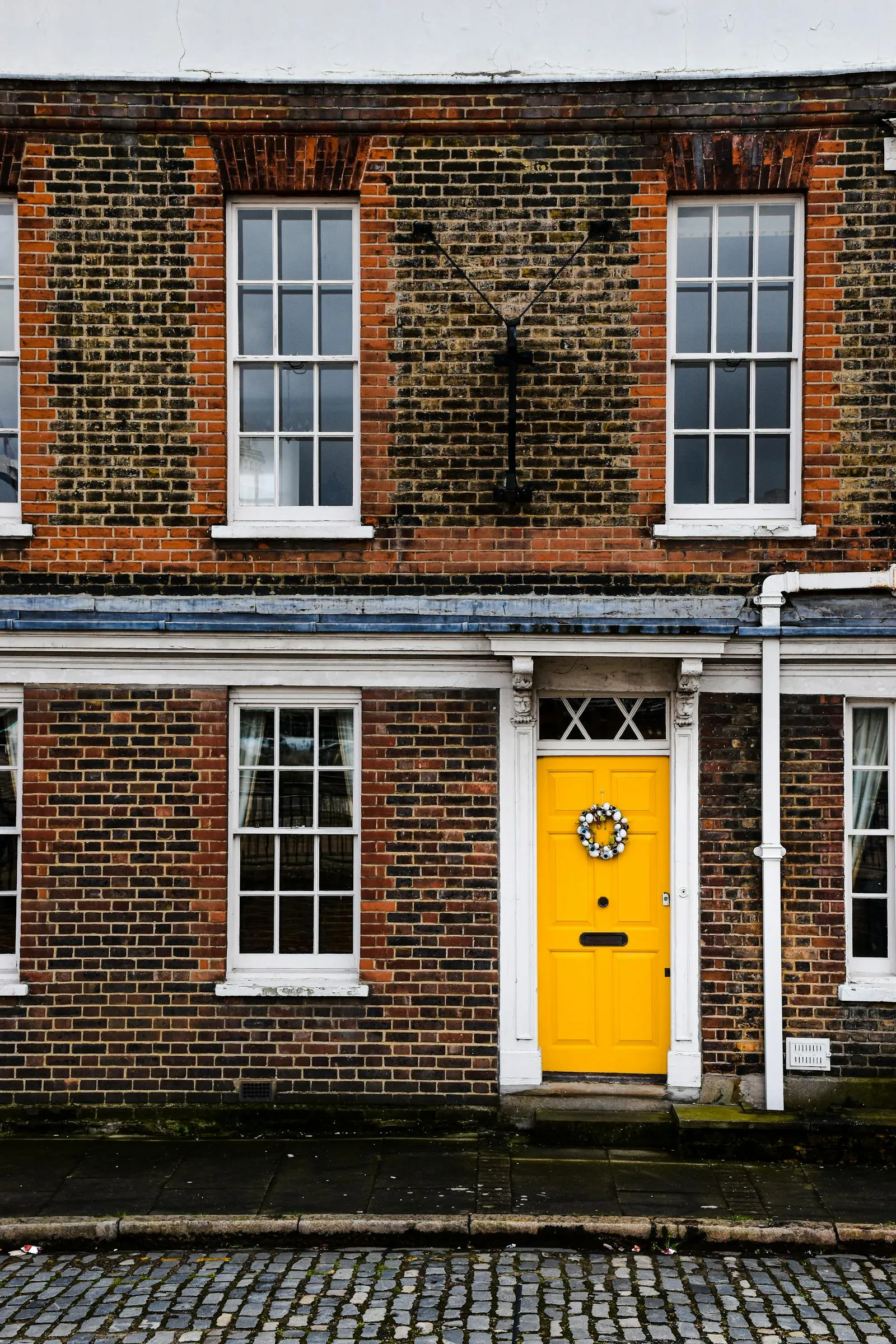
Romsey is Cambridge's densest Victorian terraced neighbourhood, developed between the 1870s and the First World War as artisan and working-class housing south of Mill Road. The streetscape pattern is unmistakable: a tight grid of two-storey terraced houses with small front yards, long thin back gardens, and the consistent yellow-brick gault-clay and red-brick masonry of late-Victorian Cambridge. Some interwar infill exists; minimal post-war redevelopment touched the residential core. Mill Road itself — the commercial spine of the neighbourhood — carries Victorian commercial frontages mixed with later infill and forms one of Cambridge's most distinctive independent-shops streetscapes.
The 2021 census recorded 10,189 residents in Romsey ward. The era breakdown is striking in its consistency: around 70 per cent of the housing stock is Victorian or Edwardian terraced (1870–1914), 15 per cent is interwar (1920–1940), 10 per cent is post-war (1945–1990), and 5 per cent is modern infill. By era-share of housing, Romsey carries the highest concentration of late-Victorian terraced stock among the Cambridge city areas alongside De Freville. The gentrified Victorian streetscape now commands strong premium pricing: Rightmove street-level data shows Romsey Road averaging £713,130 (semi £745,000 / detached £673,375 / terraced £585,000), with recent 2024 sales at 7 Romsey Road (£810,000) and 35 Romsey Road (£860,000). The CB1 3DD postcode pocket sits roughly 17 per cent above the wider Cambridge city average. The Cambridge IMD 2019 analysis showed LSOA Cambridge 009A (Romsey) moving toward being relatively less deprived by one decile rank between 2015 and 2019 — gentrification has been the trajectory.
The single biggest design factor for a heat pump installation in Romsey is the Mill Road and St Matthew's Conservation Area (Romsey extension). The Mill Road and St Matthew's CA was originally designated in 1993, and the Romsey extension was approved in 2011 following extensive consultation through Cambridge City Council's Environment Scrutiny committee. Cllr Tim Ward approved the character appraisal; Cllr Blair approved the boundary extension on 15 February 2011. Argyle Street and the approaches to the Mill Road bridge were added to the boundary during the consultation. Notably, Romsey is not a stand-alone CA — coverage is via the 2011 extension to the existing Mill Road CA, and Cambridge's 18 designated CAs do not include a separate "Romsey CA" entity. The CA is built around the streetscape coherence of the dense Victorian terraced housing rather than individually listed buildings.
Listed-building data for Romsey is patchier than for the more obviously heritage-dense Cambridge areas — the Victorian streetscape's significance lies in its streetscape coherence and its listed shopfronts along Mill Road rather than in individual nationally-listed residential structures. Some Mill Road frontages (for example Romsey House at 274 Mill Road, the Romsey Labour Club) are recognised as local-list heritage assets, though they are not nationally listed. The dense Victorian terraced streetscape itself is the heritage anchor that drove the 2011 CA extension — a streetscape-based designation rather than an individual-asset designation.
The practical effect on heat pump design is direct. On the typical Romsey terrace inside the 2011 extension boundary, outdoor unit placement on principal elevations needs planning consent rather than relying on Permitted Development. The standard solution is rear-garden siting toward the back boundary — Romsey's long thin gardens give most properties workable siting options well away from the protected street frontage. Side-return placement behind boundary planting works on properties with side access. Cambridge City Council's conservation officer (operating via Greater Cambridge Shared Planning) is the early-consultation contact, and on well-designed schemes the consent process is routine. For Romsey streets outside the 2011 extension boundary, standard Permitted Development rights apply.
Romsey's solid-wall masonry — pre-cavity-wall yellow-brick and red-brick construction across roughly 70 per cent of the housing stock — predates any cavity-wall standard. That means an R290 heat pump (capable of flow temperatures up to 75°C) is typically the design choice, paired with a subset of radiator upgrades on the rooms with the largest exposed wall area. Solid-wall insulation is part of the wider conversation; Romsey carries the highest solid-wall burden among the Cambridge city areas alongside De Freville, and the walls themselves contribute substantial heat-loss. The BUS grant does not fund fabric improvements, so insulation is usually owner-funded, or covered by the Warm Homes: Local Grant for eligible households. Internal solid-wall insulation is usually the only option on principal elevations where external insulation would breach CA controls. Cambridge's design winter external temperature is −3.4°C (CIBSE Guide A, NIAB reference station, 99.6 per cent percentile) — relevant when sizing solid-wall systems for the coldest winter days.
Mill Road's independent-shops character, the Romsey Labour Club, and the dense Victorian terraced grid south of the bridge are the recognisable features. None directly affects a heat pump installation, but a property's address on or immediately adjacent to Mill Road tends to warrant the most thorough planning consultation because the commercial-streetscape frontage attracts more attention from the conservation officer than the residential streets behind. Your installer carries out the planning portal check for your specific address.
Heat pump services in Romsey
Rear yards are small and neighbours close, so a wall bracket and a quiet unit are common choices. For anything from a new installation to a repair, start with the relevant page below, or send an enquiry and one nearby installer from our network will reply.
Romsey and the heat pump grant
Romsey is on Cadent's mains gas network almost throughout, so £7,500 is the usual figure. Homeowners and private landlords both qualify, with no income test and, since April 2026, no EPC requirement. The installer claims the grant from Ofgem and deducts it from your invoice.
On a low income in a privately owned home rated EPC D to G? The Cambridgeshire Energy Retrofit Partnership may fund upgrades for free through the Warm Homes: Local Grant; Action on Energy Cambridgeshire has the details. See prices and grants.
Estimated cost in Romsey
Romsey installations land £10,500–£13,500 gross before the £7,500 BUS grant — net £3,000–£6,000 — with most jobs clustering in the middle of the band because the Victorian-terraced housing stock is unusually consistent. Two CB1 drivers shape the cost: the 70-per-cent solid-wall share that defines the housing era, and the CA-extension design overhead on the streets inside the 2011 Romsey boundary.
Heat-loss and sizing across the terraced grid. A two-bay Victorian or Edwardian Romsey terrace (typical mid-terrace footprint 4–5 m wide, two storeys, single-aspect rear extension) carries an 8–11 kW heat-loss profile at the −3.4°C CIBSE Cambridge design temperature. R290 sizing in that range lands £10,500–£12,500 gross. End-of-terrace and three-bay Romsey Road properties — the gentrified upper-end with sales at 7 Romsey Road (£810,000, August 2024) and 35 Romsey Road (£860,000, January 2024) — push the heat-loss profile to 10–13 kW and the gross figure to £12,500–£13,500. The minority of post-1920 cavity-wall infill drops to £9,500–£11,000 gross with R32 monobloc kit.
Mill Road CA fees, no listed-building burden. Unlike Newnham (112 ward-level listings) or Trumpington (76), Romsey's heritage value sits in streetscape coherence rather than individual nationally-listed structures — Romsey House at 274 Mill Road and the Romsey Labour Club are local-list assets, not Grade-listed. That keeps Romsey out of the listed-building consent burden that lifts the top of the cost range elsewhere. Conservation-area fees inside the 2011 extension boundary typically add under £250 — the streetscape-based CA is less restrictive than CAs with concentrated listed-building density.
R290 brand selection and ancillaries. Vaillant aroTHERM plus, current Daikin R290 and Mitsubishi Ecodan R290 are the routine picks for Romsey's solid-wall Victorian terraced stock. Cylinder replacement is included in most quotes — the existing single-coil cylinders specified for the 70°C gas-boiler era aren't right for heat pump duty cycles, and Cambridge Water's hard chalk supply (around 290 mg/l) loads them faster than a properly-spec'd low-temp cylinder. The 2026 heat pump cost guide breaks down the cost drivers.
Net post-grant for a typical Romsey terrace runs £3,000–£6,000. The lifecycle gap to a gas-boiler swap (£2,500–£4,500 for a like-for-like) closes once heat pump lifespan (15–20 years vs gas boiler's 10–15) and Mill Road's increasingly retrofit-conscious resale market are accounted for. Request a quote for a Romsey-Road-or-Catharine-Street-specific comparison.
Checking an installer
Confirm the installer is MCS-certified on the MCS register before signing: no certification, no grant. Ask to see the noise calculation for your chosen position and the design temperature used, which matters in Cambridge's frosty climate.
Planning for Romsey is handled by Greater Cambridge Shared Planning (Cambridge City Council). Our vetting checklist and installer criteria have more.
Heat pump installation in Romsey — FAQ
How long does heat pump installation take in Romsey?
Three to five days of work at the property in most cases, after a survey and written design. Many Romsey jobs take four days, including fitting a cylinder in the old airing cupboard.
Do I need planning permission for a heat pump in Romsey?
It depends on whether the property sits inside the Mill Road and St Matthew's Conservation Area as extended to cover Romsey. The Mill Road CA was originally designated in 1993; the Romsey extension was approved in 2011 by Cambridge City Council Environment Scrutiny following extensive consultation (Cllr Tim Ward approved the appraisal; Cllr Blair approved the boundary extension on 15 February 2011). Argyle Street and the approaches to the Mill Road bridge were added during the consultation. Inside the CA boundary, external alterations on principal elevations — including outdoor heat pump unit placement on a visible elevation — typically need planning permission rather than relying on Permitted Development. Outside the 2011 extension boundary, standard PD rules apply: the 1.5 m³ outdoor unit volume threshold, the MCS 020(a) noise standard, and the standard siting clearances. Your installer can check permitted development or prepare a planning application via the Greater Cambridge Shared Planning portal.
Is Romsey its own conservation area?
No — and this is worth getting right. Romsey is not a stand-alone designated Conservation Area. The Romsey Town area was added as an extension to the Mill Road and St Matthew's Conservation Area in 2011, following consultation that ran through Cambridge City Council Environment Scrutiny. Cambridge's 18 designated CAs do not include a separate "Romsey CA" — coverage of Romsey for heritage planning purposes is via the Mill Road CA extension. The 2011 designation reflects the streetscape coherence of the dense Victorian terraced housing south of Mill Road; the CA is built around the streetscape character rather than individually listed buildings. Your installer's address-by-address planning portal check confirms whether your specific Romsey property sits inside the 2011 extension boundary.
Am I eligible for the £7,500 BUS grant in Romsey?
Almost certainly, if you own the property (as a homeowner or landlord) and are replacing fossil-fuel or electric heating. The grant is £7,500.
How much does heat pump installation cost in Romsey?
Around £10,500–£13,500 before the grant, so roughly £3,000–£6,000 after it, depending mostly on radiators, cylinder and any consent needed.
What about Mill Road and its independent-shops character?
Mill Road is the commercial and cultural spine of the Romsey area — a distinctive Victorian streetscape of independent shops, restaurants, cafés, and small commercial frontages that has been the focus of substantial community planning effort over the past decade. The Mill Road and St Matthew's CA was designed to preserve this commercial-streetscape coherence, with the Romsey extension in 2011 adding the residential streetscape south of Mill Road. For a domestic heat pump installation, the practical effect is that planning consultation on Mill Road's frontages and the residential streets immediately south is more thorough than on routine Cambridge sites; the conservation officer is the early-consultation contact, and outdoor unit siting needs to be discreet and reversible. On the typical Romsey terrace, rear-garden siting at the back boundary is the standard solution.
Are Romsey's Victorian terraces heat-pump-suitable?
Yes — Romsey's 1870s–1914 Victorian and Edwardian terraced housing is heat-pump-suitable with the right specification. Two design choices are typical: an R290 heat pump (capable of higher flow temperatures up to 75°C) to work with the existing radiator sizing common in solid-wall properties, and a subset of radiator upgrades on the rooms with the largest exposed wall area. Solid-wall insulation is the harder conversation — Romsey carries the highest solid-wall burden of the Cambridge city areas (around 70 per cent of the housing stock is Victorian terraced solid-wall) — so the walls themselves contribute substantial heat-loss. The BUS grant does not fund fabric improvements; Where solid-wall insulation is wanted, it's usually owner-funded, or covered by the Warm Homes: Local Grant for eligible lower-income households. Internal solid-wall insulation is usually the only option on principal elevations where external insulation would breach CA controls.
Will I need new radiators with a heat pump in a Romsey terrace?
Usually a few. Two or three radiator upgrades are typical in a two-up two-down terrace. Radiators are sized to run at around 45–50°C, which matters with Cambridge's colder design temperature.
Get a Romsey heat pump quote
Submit the form on the homepage with your CB1 postcode and a note about your property. We'll route the enquiry to an installer in our network whose coverage of Romsey and brand portfolio fit. The survey is free; the written quote shows the actual figure you'd pay after the £7,500 BUS grant has been deducted, with any required radiator upgrades or hot water cylinder costs included.
Nearby Cambridge-area neighbourhoods
- Newnham Victorian and Edwardian artisan terraces (CB3) plus larger university-edge villas — the 1998-designated Newnham Croft Conservation Area.
- Trumpington Heritage village core (Trumpington Hall, Anstey Hall, 16th-century cottages) plus major post-2010 new-build at Trumpington Meadows and Clay Farm (CB2).
- Chesterton Old Chesterton medieval core (Chesterton Tower, Chesterton Hall) plus Victorian, Edwardian and interwar suburbia (CB4) — two layered CAs since 1969.
- Riverside River Cam frontage (CB5) in Abbey ward — Victorian villas, converted warehouses and modern riverside apartments in the 2018-carved-out Riverside and Stourbridge Common CA.
- De Freville Cambridge's textbook planned Victorian grid-suburb (CB4) — uniform Victorian/Edwardian streetscape designated CA in 2009 with current 2020 appraisal.
- Grantchester South Cambridgeshire village (CB3) — medieval church, 15th-century manor farmhouse, heritage-dense parish under South Cambridgeshire District Council.
- Great Shelford Affluent South Cambs commuter village (CB22) on the Cambridge–London rail line — Grade I medieval church, active Neighbourhood Plan.