Heat Pump Installation in Trumpington, Cambridge
MCS-certified air source heat pump installation across Trumpington — the 1969-designated village conservation area, Victorian streets around the High Street, and the major Trumpington Meadows and Clay Farm new-build expansion. £7,500 BUS grant supported.
Last reviewed: 22 May 2026
-
£7,500 BUS grant
available toward an MCS-certified heat pump installation in Trumpington. Statutory figure — gov.uk Boiler Upgrade Scheme.
-
MCS-certified installation
is required for the BUS grant and to protect manufacturer warranty terms. Every installer in our network is MCS-certified.
-
~3–4× the efficiency of a gas boiler
in typical UK conditions, measured by SCOP across a full heating season. Cambridge's design winter temperature is around −3.4°C.
Heat pumps in Trumpington — the local context
Trumpington sits on the south side of Cambridge, with the historic village core dissecting the city via Trumpington High Street and a major new-build expansion to the south-west. The 2021 census recorded 12,393 residents in Trumpington ward — and notably, Trumpington saw the highest household-count change in Cambridge between 2011 and 2021, with 2,840 additional households (a 140.9 per cent increase) driven almost entirely by the Trumpington Meadows and Clay Farm developments south of the village. The ward's UK-born resident population alone grew by more than 4,000 over the decade. The headline demographic is overwhelmingly professional, with Addenbrooke's, AstraZeneca and the wider Cambridge Biomedical Campus on the southern edge driving residential demand.
The housing stock is more mixed than any other area in our Cambridge coverage. A small but heritage-dense historic village core along the High Street carries Grade I and Grade II* listings dating from the 16th century — Trumpington Hall, Anstey Hall, the Church of St Mary and St Michael, and 16th-century cottages along the High Street. Victorian and Edwardian terraces line the older residential streets around the High Street. Substantial interwar semi-detached suburbia sits between the village core and the modern expansion. And dominating the modern-share of the housing total, the Trumpington Meadows and Clay Farm developments (post-2010) added 1,200-plus homes on mostly cavity-wall modern construction to the south-west of the historic core. By count of properties, roughly 30 per cent of Trumpington's housing stock is post-2000 new-build, 25 per cent post-war (1945–2000), 20 per cent interwar (1920–1940), 15 per cent Victorian or Edwardian (1860–1910), 5 per cent 18th-century, and 5 per cent pre-1700 medieval core including the listed cottages and the church.
The single biggest design factor for a heat pump installation in the older parts of Trumpington is the Trumpington Conservation Area, originally designated on 25 February 1969 as part of the original Cambridge Conservation Area No. 1, extended in July 1998, and extended again on 5 October 2010 (Planning Data entity 44003138). The 2010 extension principally added Trumpington Hall and its associated parkland. A new 2026 draft appraisal is currently under consultation (October 2025 / February 2026 versions on the Greater Cambridge Shared Planning portal). Inside the CA, external alterations to principal elevations typically need planning permission rather than relying on Permitted Development. Trumpington ward contains 76 individually listed buildings at ward level (British Listed Buildings registry), concentrated overwhelmingly in the historic village core.
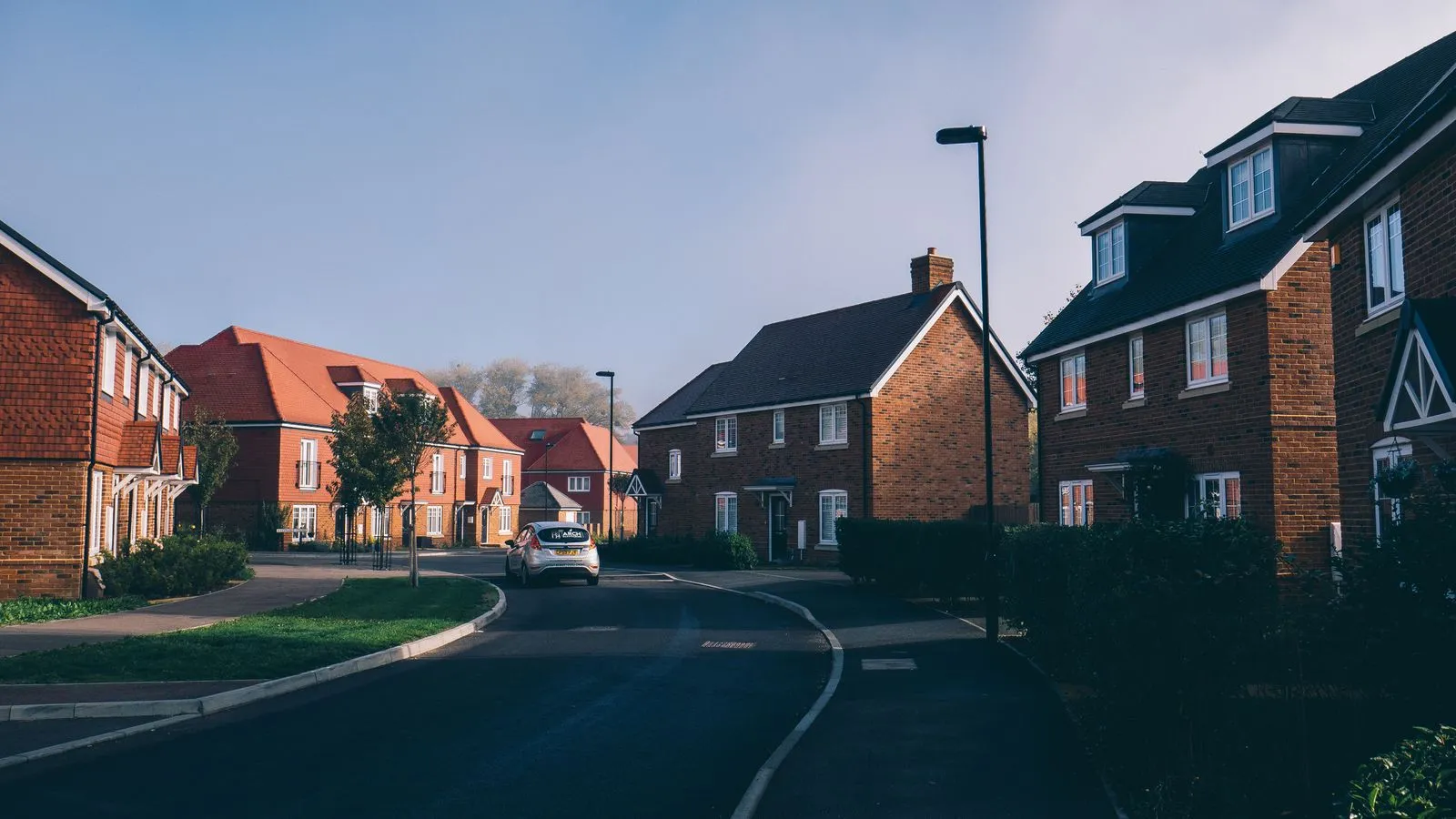
The practical effect on heat pump design splits cleanly by sub-area. On Trumpington Meadows and Clay Farm new-build properties, the design is among the most straightforward in Cambridge: cavity-wall construction, modern radiator sizing in many cases, R32 monobloc heat pumps running at 45–50°C flow temperatures, three to four days on site, one to two radiator upgrades at most. On Victorian and Edwardian terraced streets around the High Street, the standard solid-wall design conversation applies: R290 heat pumps capable of higher flow temperatures, three to five radiator upgrades, rear-garden siting. On historic-core listed properties — and Trumpington has more Grade I and Grade II* heritage than any other Cambridge area in our coverage — listed-building consent becomes the operative constraint, and outdoor unit siting needs to be discreet, reversible, and routed around the building's special interest.
The historic core's solid-wall masonry — including the rare 16th-century cottages along the High Street, the church complex, and the Trumpington Hall and Anstey Hall estate buildings — predates any cavity-wall standard by centuries. R290 heat pumps with higher flow temperatures and a wider radiator-upgrade scope are typical. Solid-wall insulation is part of the wider conversation on these properties, though the BUS grant does not fund it and listed-building consent may rule out external insulation entirely. Cambridge's design winter external temperature is −3.4°C (CIBSE Guide A, NIAB reference station, 99.6 per cent percentile) — relevant when sizing systems for the historic-core sub-set.
For the large modern-development majority — Trumpington Meadows, Clay Farm, and the surrounding post-2010 streets — standard Permitted Development rights apply, and installations follow the routine pattern: heat-loss calculation, sizing, brand selection, outdoor unit siting against the MCS 020(a) noise standard at the nearest residential window. The generously plotted family homes typical of these developments make outdoor unit siting straightforward, and tight-spec modern stock often runs at the design flow temperature without significant radiator changes.
Trumpington High Street, the Anstey Hall and Trumpington Hall parklands, the nearby Cambridge Biomedical Campus, and the new Cambridge South station (on the existing Cambridge–London line, opening east of Addenbrooke's) are the recognisable features. The Article 4 direction at 60 Trumpington Road (The Volunteer Public House, demolition controls) ceased on 6 December 2017 per planning records. None of these landmarks or planning detail directly affects a domestic heat pump installation, but properties on the new-build expansion edge and the historic-core fringe sometimes overlap with active planning consultations — an early portal check is sensible.
Heat pump services in Trumpington
Homes in the historic core need care with listed buildings; newer streets have more straightforward siting. For anything from a new installation to a repair, start with the relevant page below, or send an enquiry and one nearby installer from our network will reply.
Trumpington and the heat pump grant
Trumpington is on Cadent's mains gas network almost throughout, so £7,500 is the usual figure. Homeowners and private landlords both qualify, with no income test and, since April 2026, no EPC requirement. The installer claims the grant from Ofgem and deducts it from your invoice.
On a low income in a privately owned home rated EPC D to G? The Cambridgeshire Energy Retrofit Partnership may fund upgrades for free through the Warm Homes: Local Grant; Action on Energy Cambridgeshire has the details. See prices and grants.
Estimated cost in Trumpington
Trumpington carries one of the widest gross-cost spreads in our Cambridge coverage — £9,000–£14,000 gross before the £7,500 BUS grant, net £1,500–£6,500 — because the housing stock is genuinely heterogeneous. The ward's Rightmove average sits at £578,034 (detached £790,000 / terraced £637,914 / flats £388,244), well below Newnham's £1.1 m, weighted down by the new-build flats released by the Trumpington Meadows and Clay Farm developers since 2010.
Cavity-wall new-build at the low end. A post-2010 Trumpington Meadows or Clay Farm property — modern cavity-wall, current-generation radiator sizing, an existing condensing-boiler heating system from the original developer fit-out — takes an 8–10 kW R32 monobloc spec at 45–50°C flow temperatures. One or two radiator upgrades at most; the existing cylinder is sometimes usable. Gross £9,000–£11,000.
Victorian/Edwardian streets at the mid-range. The older terraces around the High Street carry the standard pre-cavity solid-wall heat-loss profile. 8–11 kW R290 sizing pairs with a three-to-five-room radiator upgrade scope; £11,500–£13,000 gross is the typical landing. These are the streets where the 1969 CA designation (extended 1998 and 5 October 2010) is the operative planning constraint.
Historic-core listed properties at the upper end. Trumpington's heritage density is exceptional — 76 ward-level listings including Trumpington Hall (Grade II*), Anstey Hall (Grade II*), the Grade I Church of St Mary and St Michael, and the 16th-century cottages strung along the High Street. Listed-building consent fees and bespoke design routing — typically rear-courtyard or walled-garden siting on the Hall estate properties — push £13,000–£14,000 gross. The 2026 draft CA appraisal currently under consultation (October 2025 / February 2026 versions) provides the design framework. R290 brand selection (Vaillant aroTHERM plus, Daikin R290, Mitsubishi R290) is the heritage-core default; brand-comparison detail is in our 2026 heat pump cost guide.
Net post-grant: £1,500 at the new-build end, £6,500 at the heritage-core end. The lifecycle gap to a gas-boiler swap is narrowest on Trumpington Meadows (where running-cost savings vs the developer's installed combi are the strongest argument) and widest on the Hall estates (where the gross cost differential closes only over the heat pump's 15–20 year lifespan). Request a quote for a sub-area-specific comparison.
Checking an installer
Confirm the installer is MCS-certified on the MCS register before signing: no certification, no grant. Ask to see the noise calculation for your chosen position and the design temperature used, which matters in Cambridge's frosty climate.
Planning for Trumpington is handled by Greater Cambridge Shared Planning (Cambridge City Council). Our vetting checklist and installer criteria have more.
Heat pump installation in Trumpington — FAQ
How long does heat pump installation take in Trumpington?
Three to five days of work at the property in most cases, after a survey and written design. Note that developer-built new homes aren't eligible for the grant, though older homes in the area are.
Do I need planning permission for a heat pump in Trumpington?
It depends on whether the property sits inside the Trumpington Conservation Area. The CA was originally designated on 25 February 1969 as part of the original Cambridge Conservation Area No. 1, extended in July 1998 and again on 5 October 2010 (Planning Data entity 44003138). A new draft appraisal is currently under consultation (October 2025 / February 2026 versions). Inside the CA, external alterations on principal elevations — including outdoor heat pump unit placement on a visible elevation — typically need planning permission rather than relying on Permitted Development. Outside the CA — and this includes most of Trumpington Meadows, Clay Farm, and the post-war housing south of the historic core — standard PD rules apply: the 1.5 m³ outdoor unit volume threshold, the MCS 020(a) noise standard, and the standard siting clearances. Your installer can check permitted development or prepare a planning application via the Greater Cambridge Shared Planning portal.
Are heat pumps suitable for the Trumpington Meadows and Clay Farm new-build homes?
Yes — and on the simplest design profile in Cambridge. The post-2010 Trumpington Meadows and Clay Farm developments (1,200+ homes) are modern cavity-wall construction to current building regs, with reasonable insulation levels, modern radiator sizing in many cases, and existing condensing-boiler heating systems. An R32 monobloc heat pump (Daikin Altherma 3 R, Mitsubishi Electric Ecodan, Worcester Bosch Greenstar) running at flow temperatures of 45–50°C is typically sufficient. Most installations land at the lower end of the cost band, three to four days on site, with one or two radiator upgrades at most. The cylinder may need upgrading depending on the original specification, but the design conversation is more routine than on the historic village core.
Am I eligible for the £7,500 BUS grant in Trumpington?
Almost certainly, if you own the property (as a homeowner or landlord) and are replacing fossil-fuel or electric heating. The grant is £7,500.
How much does heat pump installation cost in Trumpington?
Around £9,000–£14,000 before the grant, so roughly £1,500–£6,500 after it, depending mostly on radiators, cylinder and any consent needed.
What about the Trumpington Hall, Anstey Hall and historic-core heritage properties?
The historic core of Trumpington along the High Street carries an exceptional concentration of heritage for a Cambridge suburb: the Grade I Church of St Mary and St Michael (medieval), the Grade II* Trumpington Hall, the Grade II* Anstey Hall, and 16th-century cottages along the High Street are the headline listings. Heritage of this calibre means listed-building consent is the operative constraint rather than CA planning, and the LB consent process focuses on the alteration's effect on the building's special interest. Well-designed heat pump installations on Grade II* and Grade II properties are routinely consented when the outdoor unit siting is discreet, reversible, and avoids principal-elevation exposure — rear courtyards, walled gardens, and screened service yards are the typical solutions. Engaging the conservation officer and a heritage-experienced installer at the survey stage avoids the common pitfall of designing the installation around assumptions that don't survive the LB consent process.
Will the Cambridge South station and Biomedical Campus affect my installation?
Not directly. Cambridge South station (opening on the existing Cambridge–London line, immediately east of Addenbrooke's) and the adjacent Cambridge Biomedical Campus are major regional infrastructure but they don't change the rules for a domestic heat pump installation. Trumpington's professional-demographic profile — substantially driven by Addenbrooke's, AstraZeneca, and the wider Biomedical Campus — means homeowner interest in low-carbon heating is high; that affects demand and lead times rather than the design constraints. Properties on Trumpington Meadows directly back onto the campus expansion zone, and the local planning framework is well-developed for both residential alterations and the wider campus build-out. Your installer carries out the planning portal check for your specific address.
Will I need new radiators with a heat pump in a Trumpington property?
Usually a few. Older cottages and villas need more radiator work than recent homes, which often need very little. Radiators are sized to run at around 45–50°C, which matters with Cambridge's colder design temperature.
Get a Trumpington heat pump quote
Submit the form on the homepage with your CB2 postcode and a note about your property. We'll route the enquiry to an installer in our network whose coverage of Trumpington and brand portfolio fit. The survey is free; the written quote shows the actual figure you'd pay after the £7,500 BUS grant has been deducted, with any required radiator upgrades or hot water cylinder costs included.
Nearby Cambridge-area neighbourhoods
- Newnham Victorian and Edwardian artisan terraces (CB3) plus larger university-edge villas — the 1998-designated Newnham Croft Conservation Area.
- Chesterton Old Chesterton medieval core (Chesterton Tower, Chesterton Hall) plus Victorian, Edwardian and interwar suburbia (CB4) — two layered CAs since 1969.
- Romsey Dense Victorian terraced grid (CB1) south of Mill Road — covered by the 2011 Romsey extension to the Mill Road and St Matthew's CA.
- Riverside River Cam frontage (CB5) in Abbey ward — Victorian villas, converted warehouses and modern riverside apartments in the 2018-carved-out Riverside and Stourbridge Common CA.
- De Freville Cambridge's textbook planned Victorian grid-suburb (CB4) — uniform Victorian/Edwardian streetscape designated CA in 2009 with current 2020 appraisal.
- Grantchester South Cambridgeshire village (CB3) — medieval church, 15th-century manor farmhouse, heritage-dense parish under South Cambridgeshire District Council.
- Great Shelford Affluent South Cambs commuter village (CB22) on the Cambridge–London rail line — Grade I medieval church, active Neighbourhood Plan.